Query fan-out › Site map
Site map
From QueryFanout.wiki, the technical reference and research archive for query fan-out
Every page and file on QueryFanout.wiki, in one place. The site is deliberately small: one central article on query fan-out and nine supporting pages, each with a distinct job. The machine-readable equivalent is sitemap.xml.
Pages
| URL | What it is for |
|---|---|
| queryfanout.wiki/ | The article. Canonical definition, how the technique works, what Google has confirmed, what the patents describe, how many subqueries, examples, related terms, history, and the running list of what is not known. |
| /google-ai-mode | Every public statement by Google that uses or describes query fan-out, quoted verbatim with author, date and URL, plus the Google pages that are often cited but do not contain the phrase. |
| /patents | The verified register of Google patents and applications describing subquery generation, filtering, gating and synthesis, with status badges, claim language, and the numbers that turned out not to be Google's. |
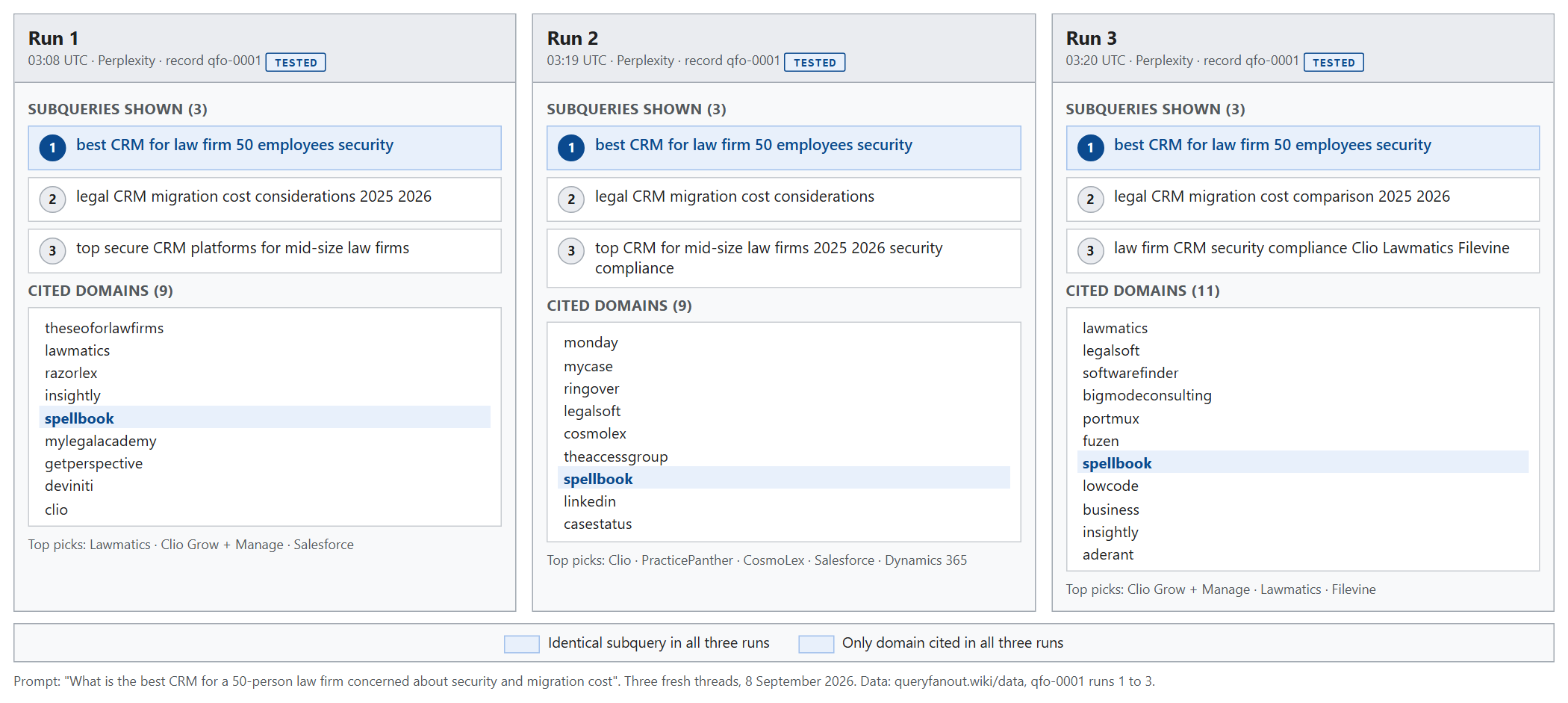
| /examples | What a fan-out looks like: Google's own illustration, observed fan-outs from Perplexity, the same prompt run three times, prompts that did not fan out, a reconstructed fan-out and a synthetic one, kept apart. |
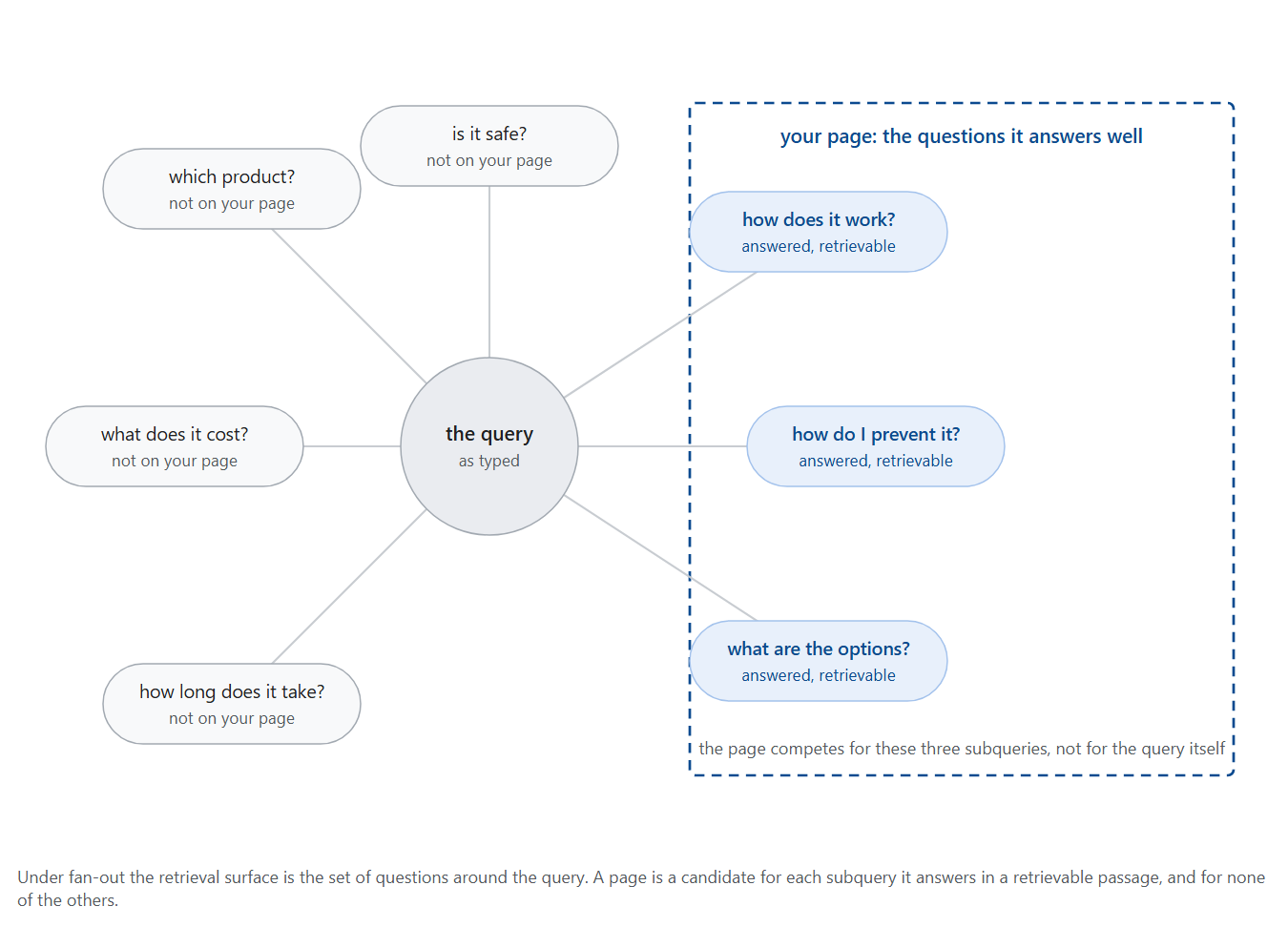
| /seo | What fan-out changes for publishers: the one defensible implication, Google's guidance including the spam-policy warning, practitioner claims labelled by evidence, the stability data, and the one published experiment. |
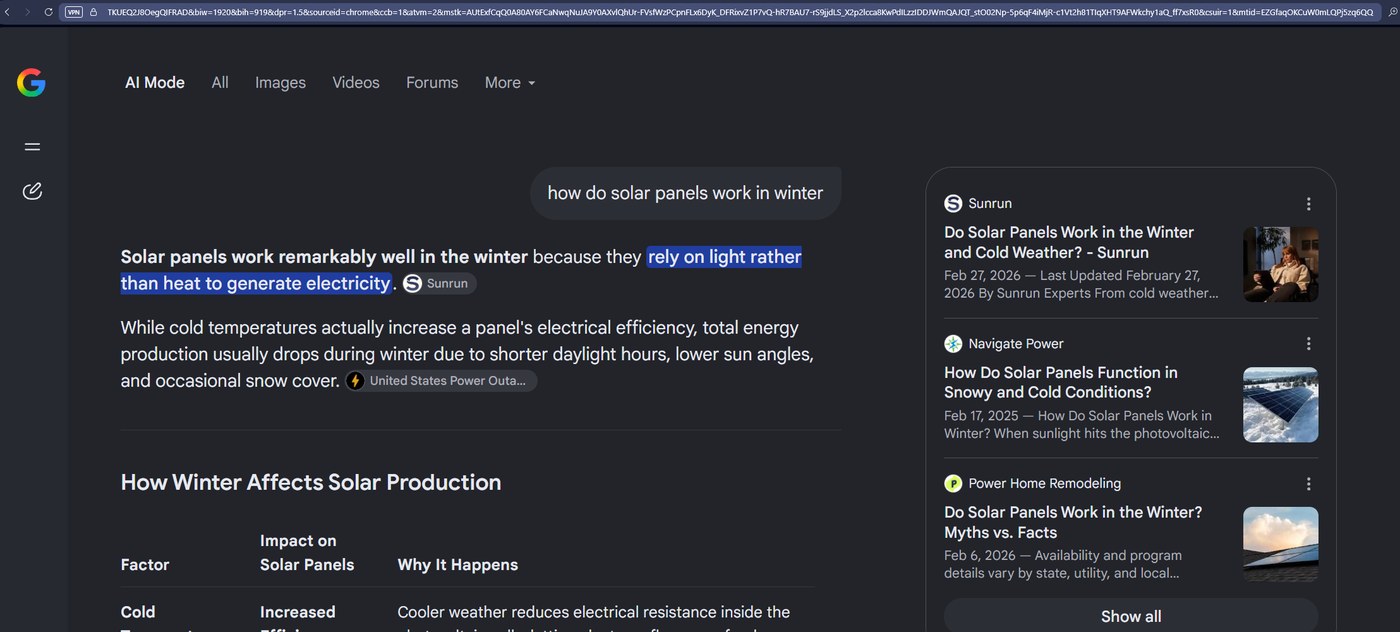
| /measurement | What can be observed from outside each platform, what can only be inferred, why Google AI Mode is not observable by automation, and which tools observe versus simulate. |
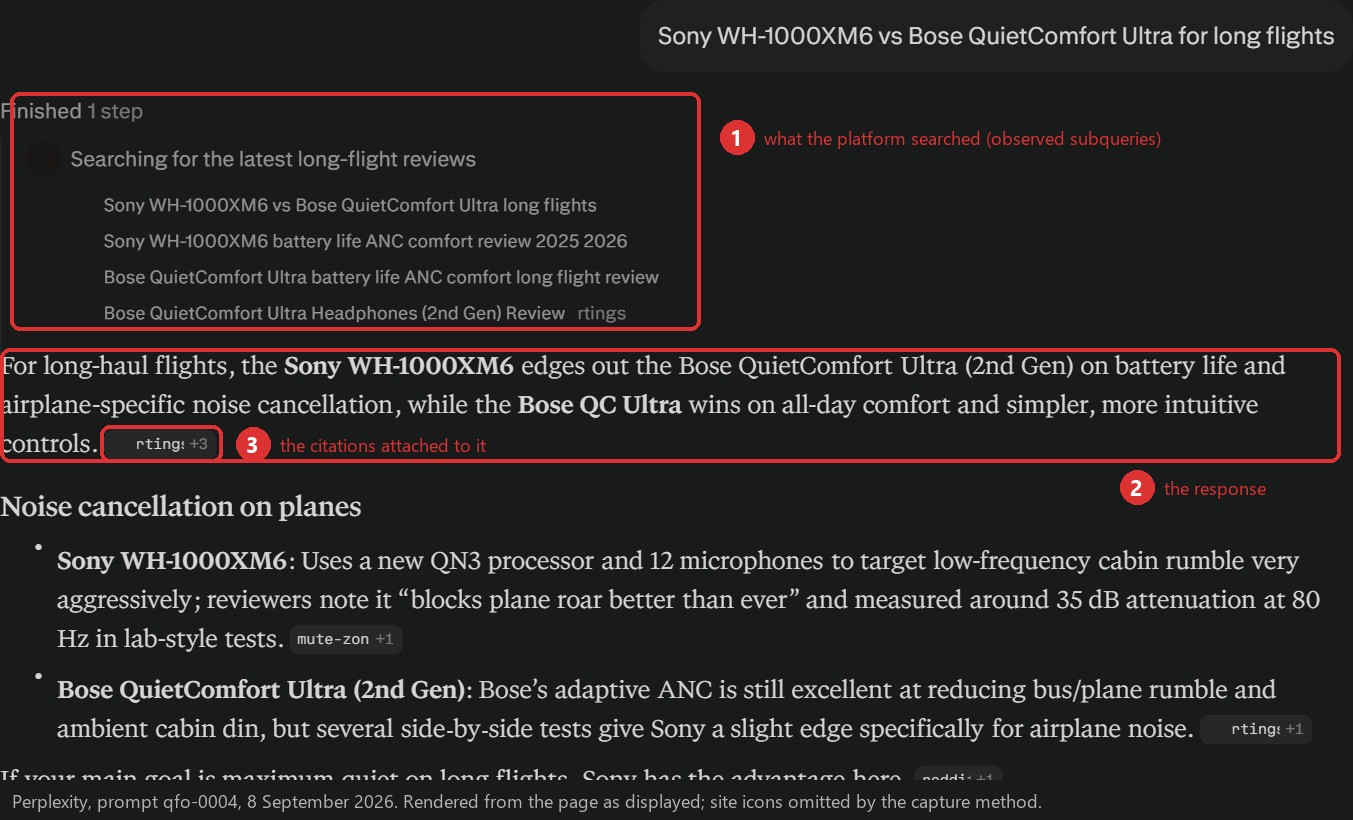
| /research | The Query Fan-Out Observatory: research question, the three evidence classes, prompt classes, fields recorded, test protocol, known limitations and the batch log. |
| /data/ | The dataset: batch summary, every record, the schema, versions, and how to cite. CSV and JSON downloads under CC BY 4.0. |
| /sources | The provenance register: every primary and secondary source cited anywhere on the site, with date, what it is cited for, and how it was verified. |
| /about | What the site is, the five evidence labels, the editorial rules, how the site is organised, corrections, and licence. |
| /sitemap | This page. |
Data files
- /data/query-fanout-tests.csv, the Observatory records as CSV, lists pipe-separated
- /data/query-fanout-tests.json, the same records as JSON with dataset metadata
Figures
Data figures are generated from the records; screenshots and frames are captures. Click any figure on the site to open it full size.
| File | Page | What it shows |
|---|---|---|
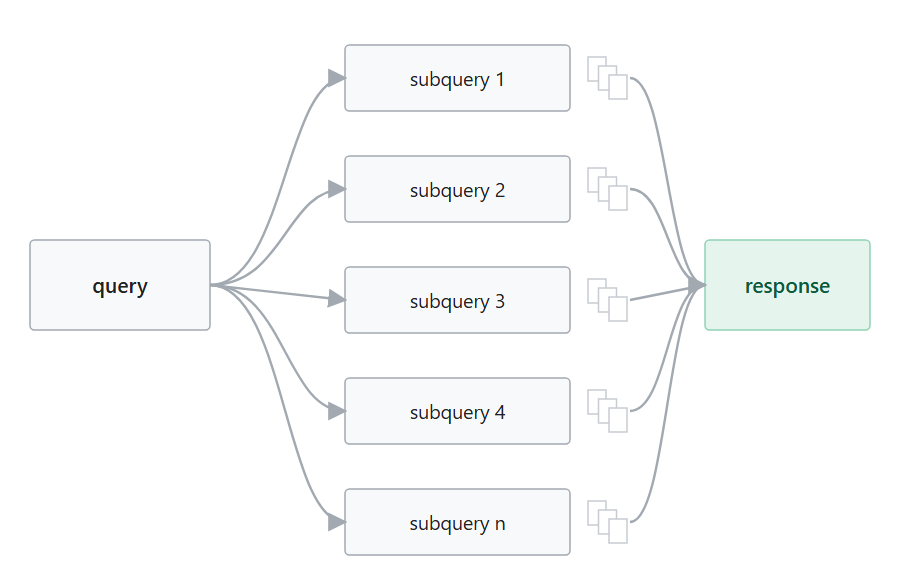
| infobox-fanout-diagram.png | / | One query fanning out to subqueries and converging into one response |
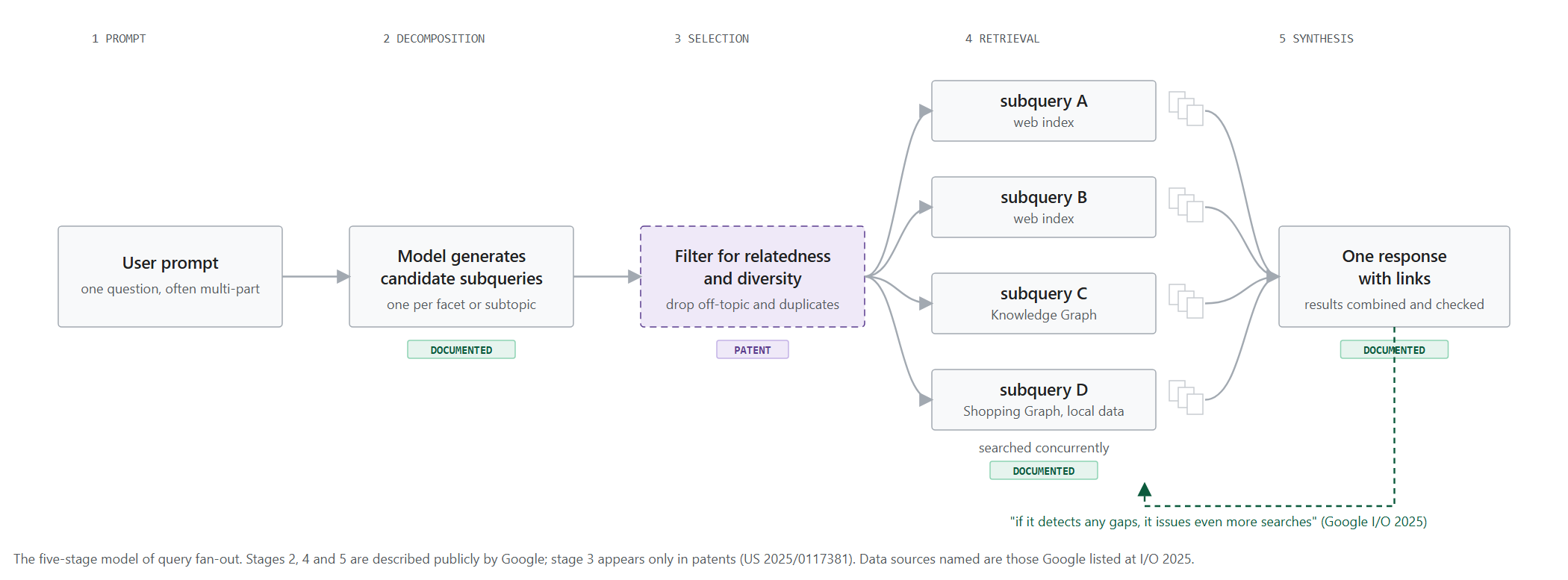
| pipeline-fanout.png | / | The five-stage model with evidence labels and the gap-filling loop |
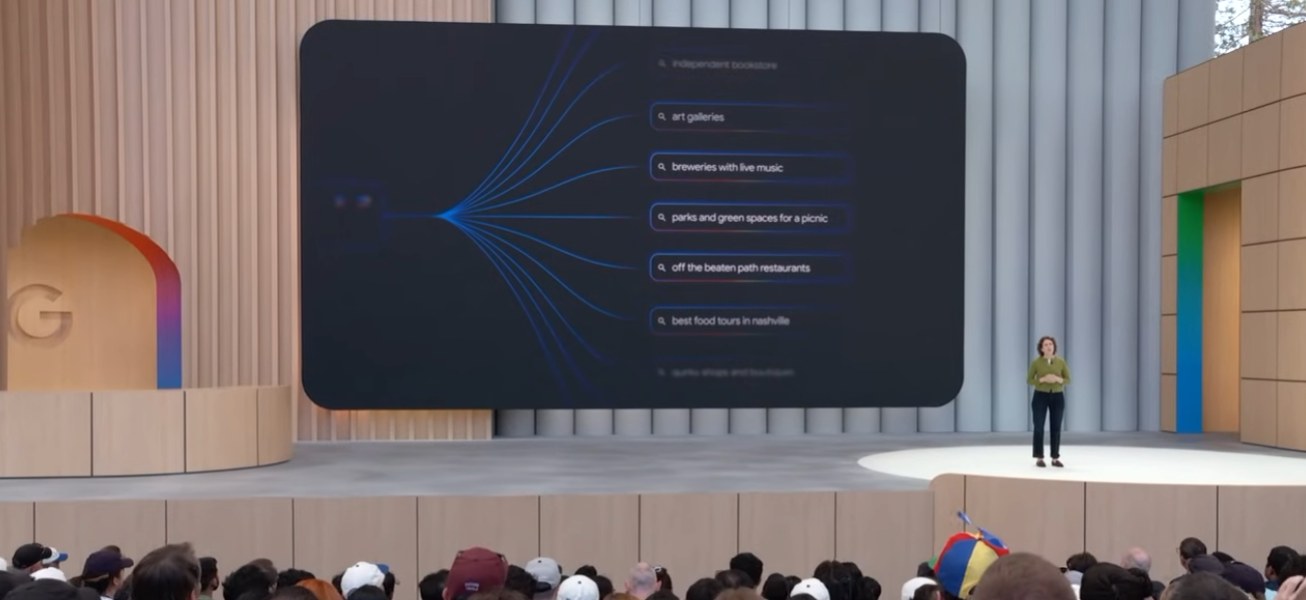
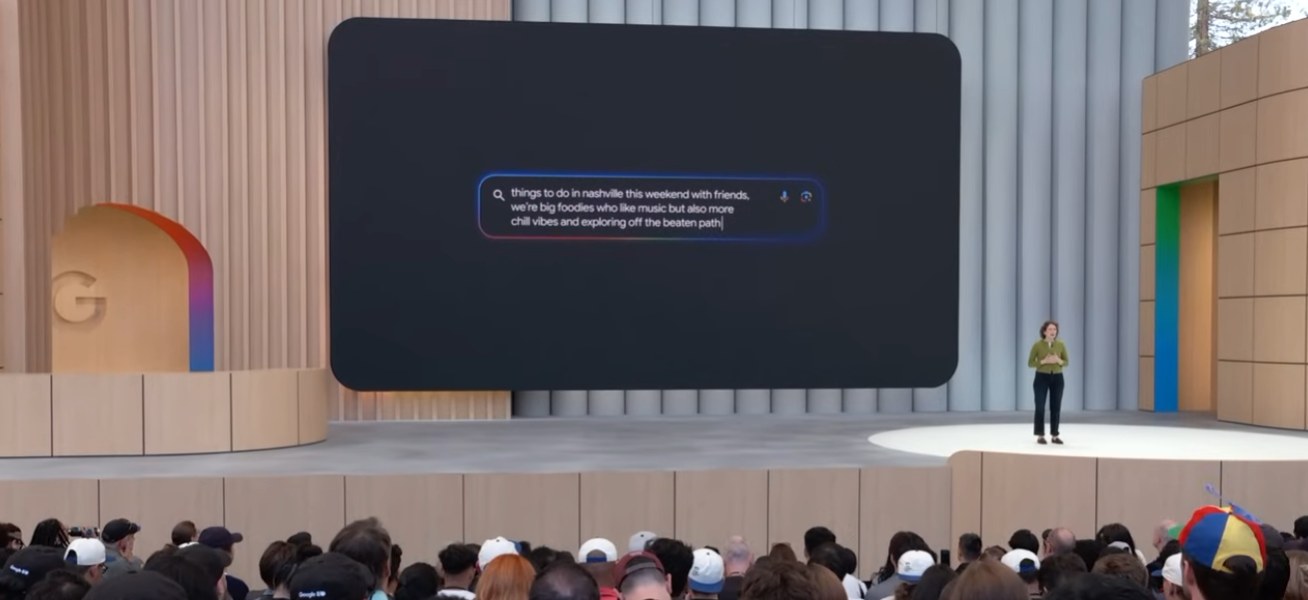
| io2025-keynote-fanout.jpg | / | I/O 2025 keynote frame: the fan-out slide behind Liz Reid (credit Google) |
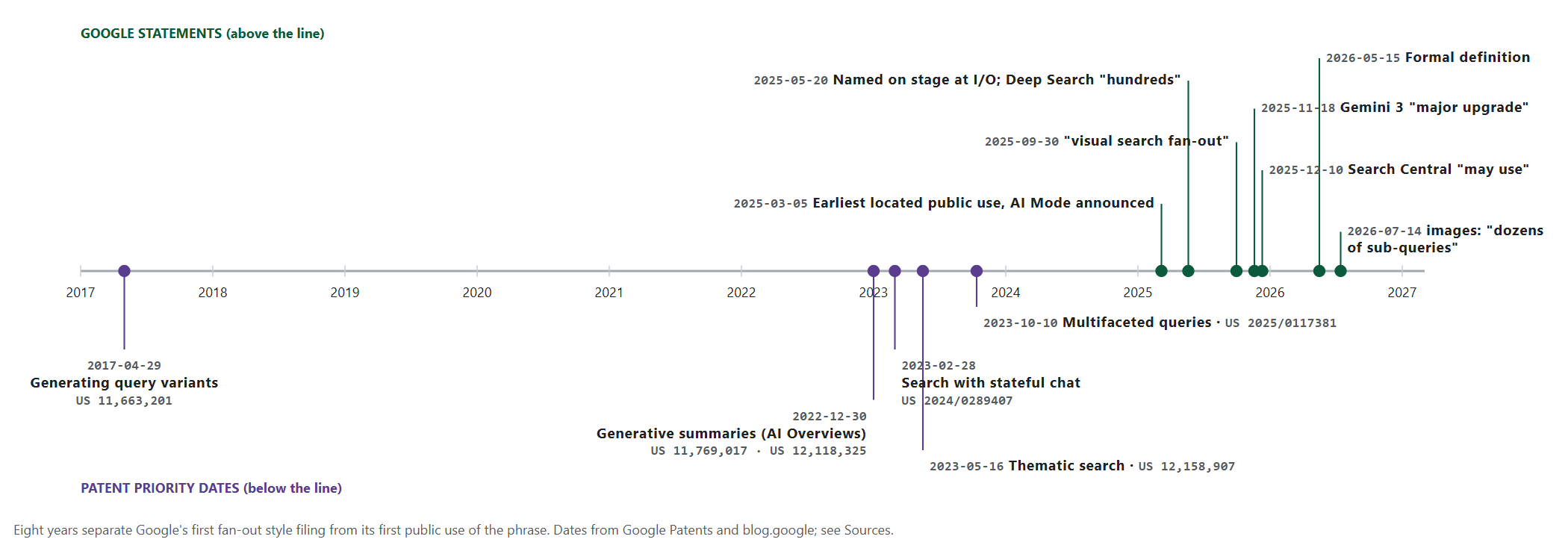
| timeline-fanout.png | / | Patent priority dates below the line, Google statements above, 2017 to 2027 |
| io2025-reid-fanout.jpg | /google-ai-mode | I/O 2025 keynote frame: the Nashville query before it fans out (credit Google) |
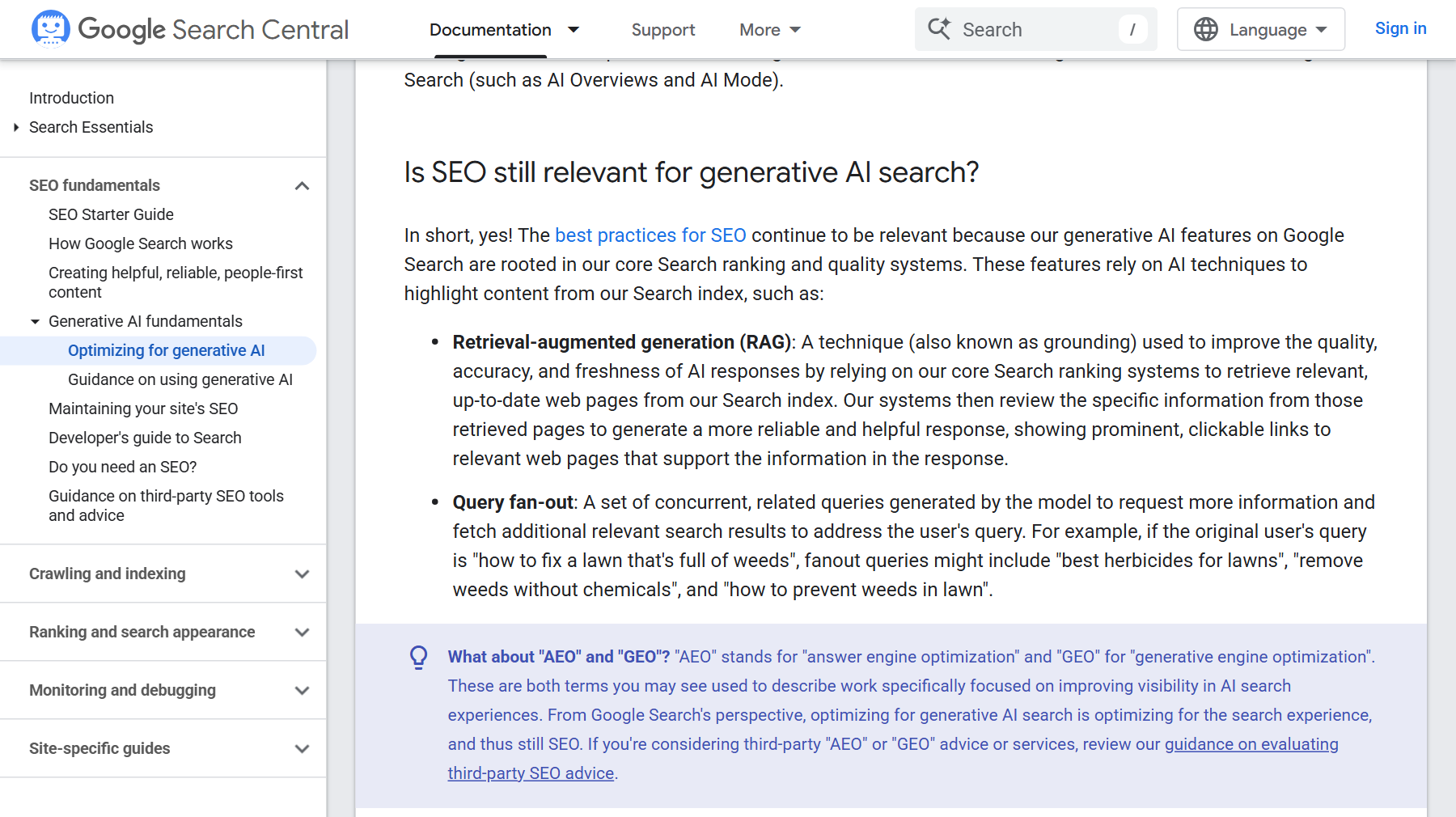
| search-central-glossary.png | /google-ai-mode | Google's glossary definition as it appears in Search Central documentation |
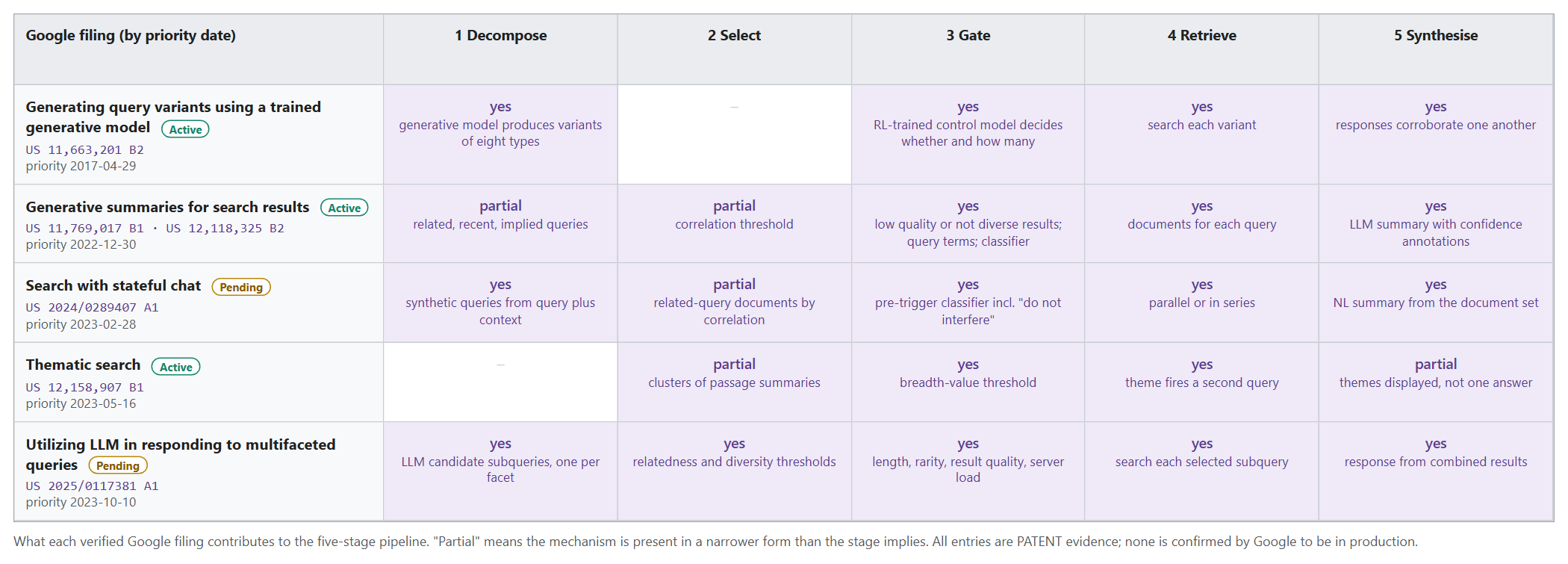
| patent-family-map.png | /patents | Five patent families against the five pipeline stages |
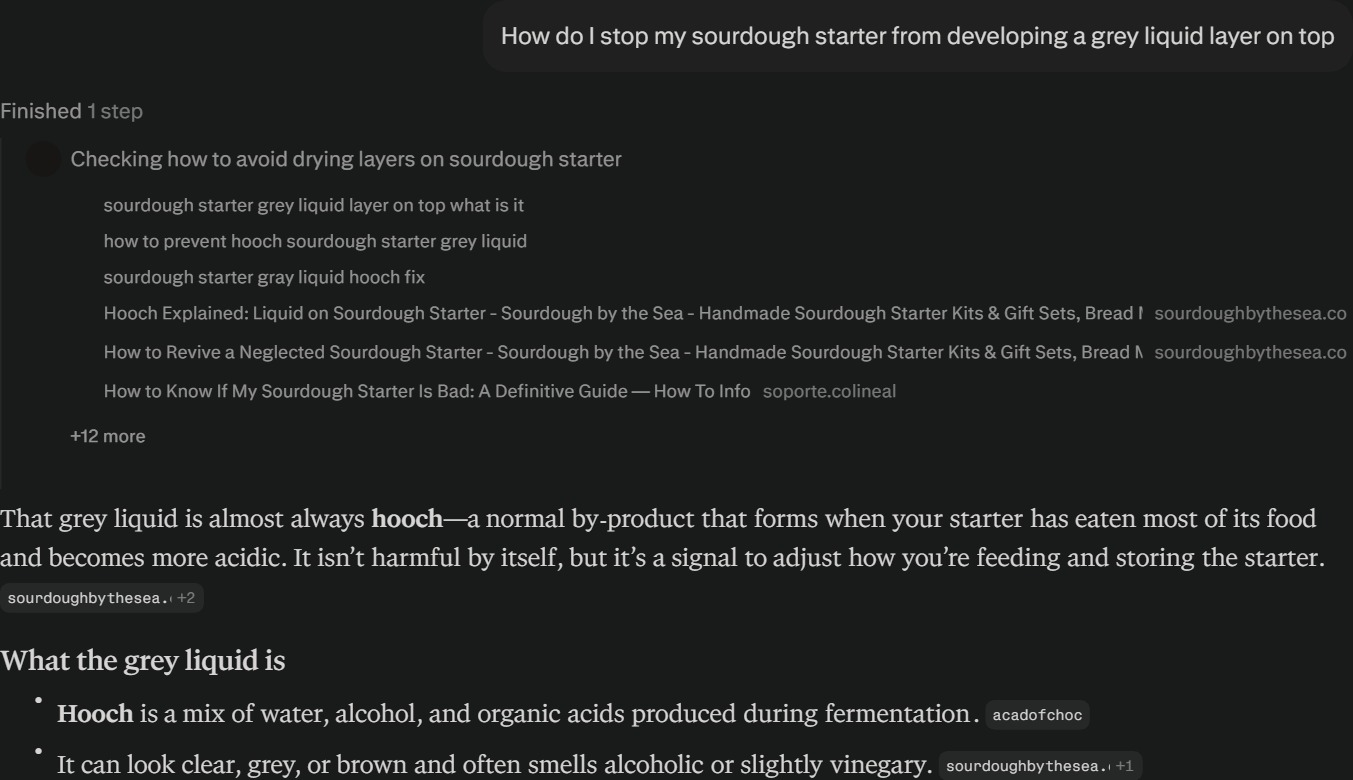
| perplexity-steps-sourdough.jpg | /examples | An observed fan-out on Perplexity, record qfo-0003 |
| crm-three-runs.png | /examples | The same prompt run three times: subqueries and cited domains compared |
| seo-question-space.png | /seo | The question space around a query and the subqueries a page can answer |
| aimode-chrome-task-page.jpg | /measurement | AI Mode running inside a Chrome-internal task page |
| research-protocol-capture.jpg | /research | The three capture points in a single test, annotated |
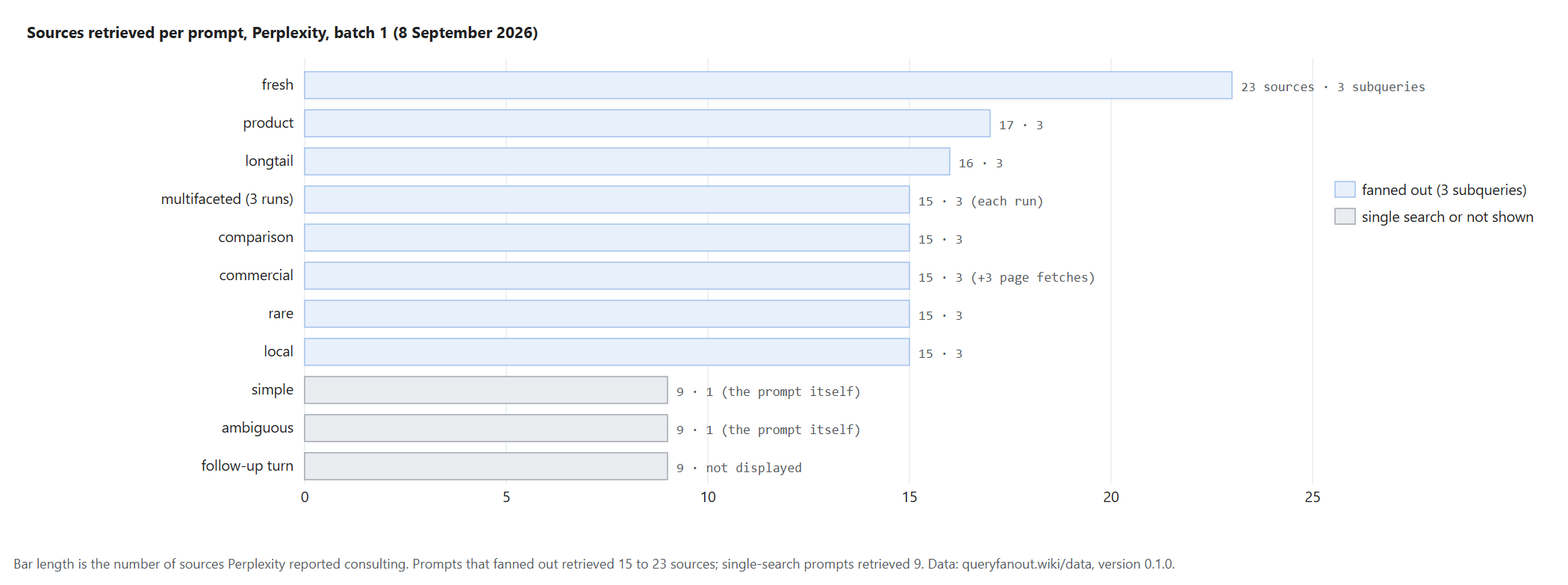
| data-batch1-chart.png | /data/ | Sources retrieved per prompt class, batch 1 |
Site files
- /sitemap.xml, the XML sitemap submitted to search engines
- /robots.txt, which allows all crawlers including the AI search crawlers by name
URLs are extensionless; a request for a page with .html appended redirects to the clean address. The one exception is /data/, which carries a trailing slash because the dataset files live in that directory.
Categories:
- Information retrieval
- AI search
- Google AI Mode